Download PDF File: Clinical Consultation Framework: Personalized Protocols for Laser Hair Removal
Laser hair removal is not a one-size-fits-all treatment. Although the basic principle remains the same, every person’s skin and hair have characteristics that influence how laser energy should be delivered. Skin tone, hair color, hair thickness, treatment area and recent sun exposure can all affect treatment planning.
Modern laser hair removal is therefore based on personalization. Before treatment begins, a qualified provider evaluates the contrast between the skin and unwanted hair, selects appropriate treatment settings and develops a schedule based on the individual’s needs.
At North Bay Laser & Skin Care Center in Santa Rosa, this personalized approach helps patients throughout Sonoma County better understand what laser hair removal can realistically accomplish and how treatments can be performed with safety, comfort and long-term hair reduction in mind.
Does Skin Tone Affect Laser Hair Removal?
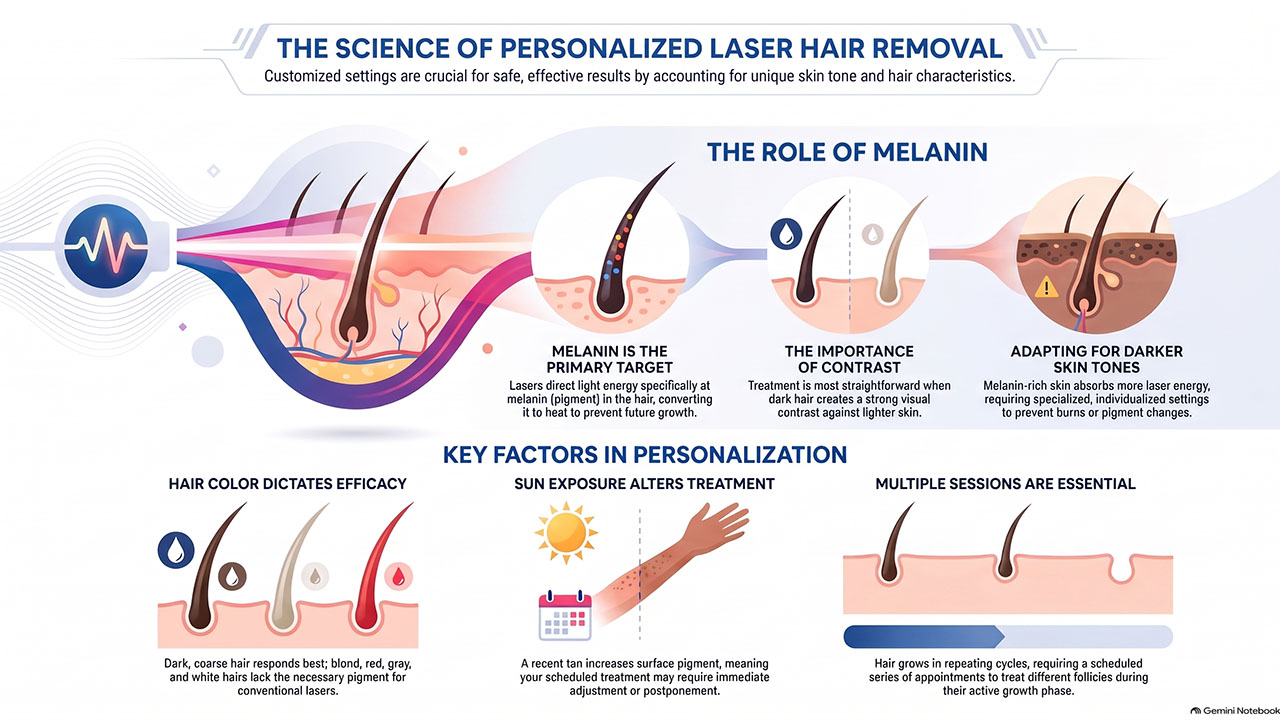
Yes. Skin tone is an important consideration because laser hair removal works by directing light energy toward melanin, the pigment that gives hair and skin their color.
When the targeted hair absorbs the laser energy, that energy is converted into heat. The heat affects structures within the hair follicle that contribute to future hair growth. Ideally, the laser concentrates its energy in the hair while limiting unnecessary heat exposure to the surrounding skin.
This is generally more straightforward when dark hair creates a strong contrast against lighter skin. However, advances in laser technology and greater understanding of treatment parameters have made it possible for many people with darker skin tones to receive laser hair removal as well.
The essential factor is not simply whether someone has light or dark skin. It is whether the equipment, settings and treatment technique are appropriate for that person’s combination of skin tone and hair characteristics.
Why Does Melanin Matter During Treatment?
Melanin is central to laser hair removal because it acts as the target for the laser’s light energy. Dark, coarse hair usually contains more melanin than light or fine hair, allowing it to absorb more of the energy directed toward it.
Skin also contains melanin. The amount and distribution of that pigment vary from person to person. When the surrounding skin contains more melanin, treatment must be planned carefully so that the laser distinguishes as effectively as possible between the pigment in the hair and the pigment in the skin.
This balance helps explain why skin tone must be evaluated before treatment. Appropriate energy levels, pulse durations, cooling methods and other settings can help concentrate treatment on the unwanted hair while protecting the skin.
Can People With Darker Skin Tones Receive Laser Hair Removal?
Many people with darker skin tones may be candidates for laser hair removal, but experience, appropriate technology and individualized settings are especially important.
Older laser systems were generally most effective when there was a pronounced contrast between dark hair and light skin. Modern approaches provide trained professionals with more ways to adapt treatment for a broader range of skin tones. This does not mean that every laser or standard group of settings is suitable for every patient.
Melanin-rich skin may absorb more laser energy than lighter skin. If too much energy reaches the surrounding skin, the risk of burns or temporary pigment changes may increase. Careful evaluation allows the provider to choose conservative, appropriate parameters and observe how the skin responds.
A consultation is therefore more valuable than making assumptions based solely on a general skin-tone category. Two people who appear to have similar complexions may still require different settings because of their hair, treatment history, medications, sun exposure or skin sensitivity.
How Are Laser Hair Removal Settings Personalized?
Personalization begins with an assessment of the skin and unwanted hair. The provider may consider:
- Natural skin tone and current level of tanning
- Hair color, thickness and density
- Contrast between the hair and surrounding skin
- Location and sensitivity of the treatment area
- Previous reactions to laser or light-based procedures
- Medications or health factors that may affect the skin
- Recent sun exposure and use of tanning products
- Response to earlier laser hair removal sessions
Laser equipment can be adjusted in several ways. These may include the amount of energy delivered, the duration of each pulse and the timing between pulses. Cooling can also be used to increase comfort and protect the surface of the skin.
Settings may change during a treatment program. As hair becomes finer or less dense, the provider can reevaluate the area and adjust the treatment plan rather than automatically repeating the exact same procedure at every visit.
Does Hair Color Affect Laser Hair Removal Results?
Hair color is just as important as skin tone. Because laser hair removal relies on melanin within the hair, it generally responds best to darker, more heavily pigmented hair.
Blond, red, gray and white hairs contain less of the pigment that conventional hair-removal lasers are designed to target. As a result, these colors may respond less predictably or may not be suitable for effective laser treatment.
Hair thickness matters as well. Coarse, dark hair often absorbs laser energy more readily than very fine hair. This is why a personalized evaluation should examine both the skin and hair instead of determining candidacy from skin tone alone.
It is also important to have realistic expectations. Laser treatment is intended to produce long-term hair reduction. Results vary, and occasional maintenance sessions may be appropriate for some patients.
Why Is Recent Sun Exposure Important?
A person’s current skin tone may be different from their natural skin tone because of sun exposure or tanning. A recent tan increases the amount of pigment near the surface of the skin, potentially changing how the skin interacts with laser energy.
Patients should tell their provider about recent sun exposure, tanning-bed use or self-tanning products. A treatment that was appropriate during one season may need to be adjusted or postponed if the skin has become significantly darker.
Following the provider’s instructions regarding sun protection before and after treatment can help reduce the possibility of unwanted pigment changes. Protecting the treated area is an important part of the overall treatment process, not simply an optional aftercare measure.
What Should Patients Expect After Treatment?
Temporary redness, mild swelling around the follicles or a sensation similar to a light sunburn can occur after laser hair removal. These effects commonly settle within a relatively short period, although individual responses vary.
Patients should follow the aftercare instructions provided for their skin and treatment area. These instructions may include gentle skin care, avoiding excessive heat and protecting the area from direct sun exposure.
Patients should also report unexpected or persistent reactions. Professional follow-up allows the provider to assess the skin’s response and make any necessary changes before the next session.
Why Are Multiple Treatments Usually Necessary?
Hair grows in repeating stages, and laser treatment is most effective when a hair is actively connected to structures within the follicle that support growth. Not all hairs enter this active phase at the same time.
A series of appointments allows different groups of active follicles to be treated as they progress through the growth cycle. The number and spacing of sessions depend on the treatment area, hair characteristics, individual growth patterns and response to treatment.
Personalization therefore involves more than adjusting the laser itself. It also means developing a schedule that corresponds with the way hair grows in the selected area.
Choosing Personalized Laser Hair Removal in Santa Rosa
Skin tone should never be treated as a minor detail in laser hair removal. It is part of a larger clinical picture that includes hair color, hair density, sun exposure, treatment area and individual skin response.
A professional consultation provides an opportunity to evaluate these factors, discuss realistic expectations and determine whether laser hair removal is appropriate. It also gives patients a chance to ask how their treatment will be customized and what they can do before and after each appointment.
North Bay Laser & Skin Care Center provides personalized laser hair removal consultations and treatments in Santa Rosa for patients from throughout Sonoma County. By adapting treatment to the individual rather than relying on a universal formula, the goal is to support effective hair reduction while prioritizing skin safety and comfort.
Frequently Asked Questions
Is laser hair removal safe for every skin tone?
Many skin tones can be treated, but safety depends on the individual assessment, the technology used and the provider’s experience. Treatment settings must be selected according to the patient’s skin and hair characteristics.
Why might my laser settings differ from someone else’s?
Your skin tone, hair color, hair thickness, treatment area and response to previous sessions may all differ. Personalized settings help direct effective energy toward the hair while limiting unnecessary exposure to the surrounding skin.
Can laser hair removal treat blond, red, gray or white hair?
These colors contain less melanin than dark hair and may not absorb enough laser energy for a predictable response. A consultation is necessary to determine whether treatment is likely to be effective.
Should I avoid the sun before laser hair removal?
Patients are commonly advised to limit tanning and unprotected sun exposure before and after treatment. Follow the specific instructions provided by your treatment professional, since recent sun exposure can affect treatment decisions.