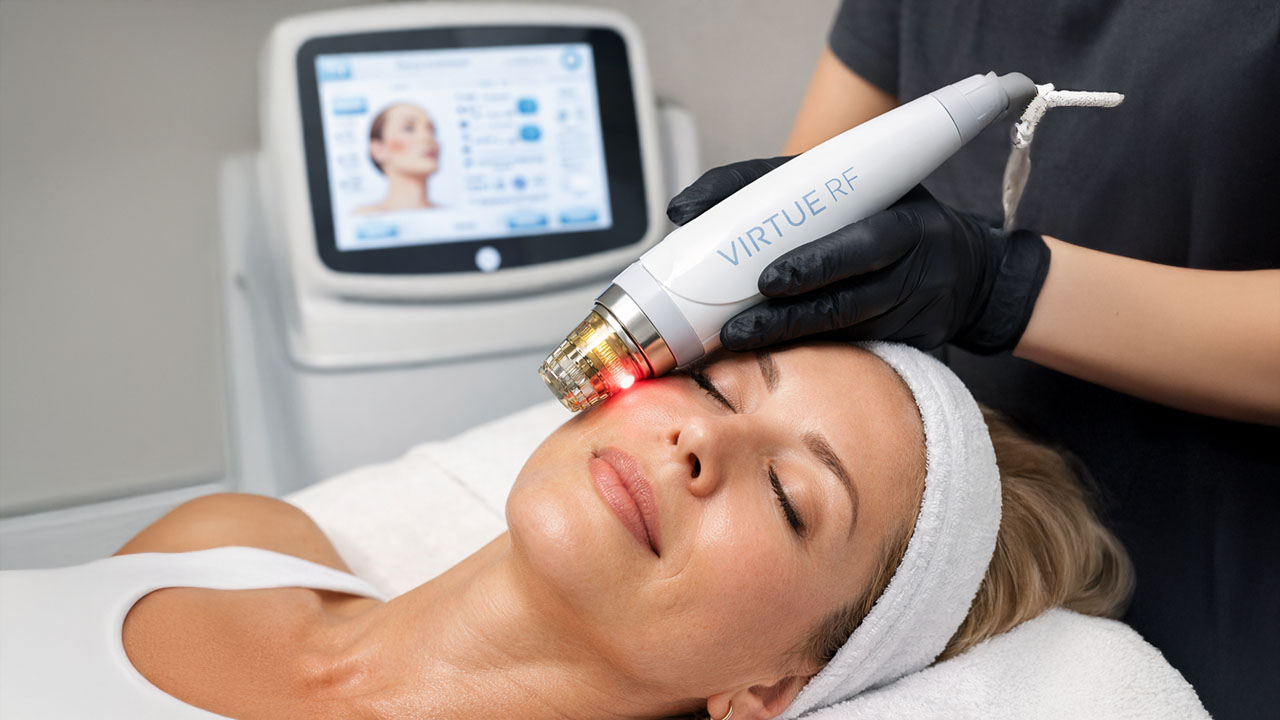
VirtueRF Skin Tightening is an advanced, minimally invasive aesthetic treatment designed to improve skin laxity, texture, and overall firmness by combining radiofrequency (RF) energy with microneedling. Often described as a next-generation approach to collagen stimulation, VirtueRF targets the deeper layers of the skin—where structural support is created—without relying on surgery or significant downtime. For people noticing early sagging, crepey skin, enlarged pores, fine lines, or uneven texture, VirtueRF offers a modern option that can tighten and refine while supporting the skin’s natural regenerative processes.
What VirtueRF Is and How It Works
VirtueRF is a form of RF microneedling. That means it uses very fine needles to create controlled microchannels in the skin while simultaneously delivering radiofrequency energy beneath the surface. Microneedling alone is known for triggering collagen remodeling by creating “micro-injuries” that the body repairs. Adding RF energy amplifies that response by gently heating targeted tissue zones, which encourages collagen contraction and a longer-term collagen and elastin rebuilding process.
Collagen is the scaffolding that helps keep skin firm and resilient. As we age, collagen production slows, existing collagen fibers degrade, and elastin (which helps skin snap back) becomes less organized. The result is looser skin, fine lines, and textural changes. VirtueRF aims to reverse some of that by prompting the body to lay down newer collagen in a more supportive structure. While results are not identical to a surgical facelift—and shouldn’t be presented as such—many patients choose RF microneedling because it can produce meaningful tightening and smoothing in a way that looks natural rather than “done.”
What Concerns VirtueRF Can Address
VirtueRF is commonly chosen for:
- Mild to moderate skin laxity (softening of the jawline, lower face, or cheeks)
- Fine lines and wrinkles (especially in areas where the skin is thinning)
- Crepey texture (often around the eyes, mouth, neck, or décolletage)
- Enlarged pores and uneven skin texture
- Acne scarring and certain types of textural scarring
- Dullness and loss of firmness
- Stretch marks (in select cases, depending on depth and location)
One reason RF microneedling is popular is that it can be used in multiple areas. The face is the most common, but many practices also treat the neck, under-chin area, chest, abdomen, arms, and knees—places where people often see laxity but don’t want surgery.
What a Treatment Feels Like
Most clinics apply a topical numbing cream before VirtueRF. Once the skin is numb, the device is passed over the treatment area in a precise pattern. Patients often describe the sensation as pressure with mild heat or prickling. Comfort varies depending on the intensity settings, the area treated, and individual sensitivity. Areas like the jawline and around the mouth can feel more intense than the cheeks, for example, because the skin is thinner and there are more nerve endings.
Treatments typically range from 30 to 60 minutes depending on how many areas are treated, not counting numbing time. Some practices can also pair VirtueRF with additional comfort measures—cooling, vibration, or inhaled analgesia—though many people do well with topical numbing alone.
Downtime and What to Expect Afterward
VirtueRF is generally considered a low-downtime procedure, but it is not “no downtime.” Immediately after treatment, most people have redness similar to a moderate sunburn, along with mild swelling. Tiny pinpoint marks may be visible for a day or two. Some patients notice a slightly rough texture as the microchannels close and the surface begins to heal. This typically resolves within several days.
A common short-term timeline looks like this:
- Day 1: Redness and warmth, mild swelling
- Days 2–3: Redness fades, skin may feel tight or slightly dry
- Days 3–7: Mild flaking or texture changes can occur
- Week 2 onward: Skin starts to look smoother and brighter as healing continues
Makeup is often allowed the next day (clinic protocols vary), but it’s important to follow a conservative aftercare routine. That usually means gentle cleansing, fragrance-free moisturizer, and diligent sunscreen. Harsh exfoliants, retinoids, and active acids are typically paused for several days to a week depending on the provider’s guidance and how your skin responds.
When Results Show Up
VirtueRF results tend to develop in stages:
- Early improvement: Some people notice a tighter, fresher look within a week or two as swelling resolves and collagen begins to contract.
- Progressive collagen remodeling: More significant changes often appear over 6 to 12 weeks as collagen and elastin rebuild.
- Peak results: Many people see their best outcome around 3 to 6 months after a series is completed.
Because the treatment relies on your body’s regenerative response, results are not instantaneous. The upside is that improvements can look very natural and can continue to build over time.
How Many Sessions Are Needed?
Many patients do a series, often 3 treatments spaced about 4–6 weeks apart, though some may need more or fewer depending on goals, age, skin laxity, and the intensity used. A single session can improve texture and mild laxity, but a series is usually recommended for tightening, scarring, or more visible aging concerns.
Maintenance is also common. After the initial series, some people choose one treatment per year (or every 6–12 months) to support ongoing collagen stimulation, especially if they’re trying to stay ahead of laxity changes.
Who Is a Good Candidate?
VirtueRF can be a good choice for adults who want firmer, smoother skin without surgery and who have realistic expectations. It’s often ideal for people experiencing early to moderate laxity, textural changes, or acne scarring. It can also be appealing for those who want a procedure that fits into a busy schedule without extended recovery.
RF microneedling is also frequently considered appropriate for a wide range of skin tones because it targets deeper layers of tissue rather than relying solely on surface light energy. That said, provider experience and proper settings matter. Any energy-based treatment can carry risk if performed aggressively or without appropriate adjustments.
Who Should Avoid It or Use Caution
VirtueRF may not be recommended (or may require special medical clearance) for individuals who are pregnant, have certain implanted medical devices, have active skin infections in the treatment area, or are prone to abnormal scarring. People with very loose skin might be better served by surgical options, while those with specific pigment concerns may need a carefully customized plan.
A thorough consultation is key, particularly if you have a history of keloids, uncontrolled acne flare-ups, severe rosacea, or are using medications that affect healing. Your provider should review your skincare routine and any recent cosmetic procedures to create a safe timeline.
Why VirtueRF Stands Out
Patients and providers often like VirtueRF because it can be customized. Different needle depths, energy levels, and treatment approaches allow providers to tailor sessions to specific areas and goals—such as tightening along the jawline, smoothing under the eyes, or improving acne scars on the cheeks. This adaptability is important because skin thickness and sensitivity vary dramatically across the face and body.
VirtueRF also fits well into combination treatment plans. Depending on your goals, providers may pair it with neuromodulators, dermal fillers, medical-grade skincare, or resurfacing treatments—carefully spaced to avoid irritation and maximize results. A well-designed plan can produce outcomes that look balanced and cohesive rather than relying on one “miracle” procedure.
The Bottom Line
VirtueRF Skin Tightening offers a modern, science-based approach to rejuvenation by combining microneedling and radiofrequency energy to encourage collagen remodeling. For the right candidate, it can improve firmness, refine texture, reduce the look of pores, and soften lines with relatively modest downtime. The best outcomes come from realistic expectations, a qualified provider, and a treatment plan tailored to your skin type, goals, and lifestyle. If you’re looking for gradual, natural-looking tightening and skin quality improvement—especially in the face and neck—VirtueRF is a strong option worth exploring in consultation with an experienced practice.