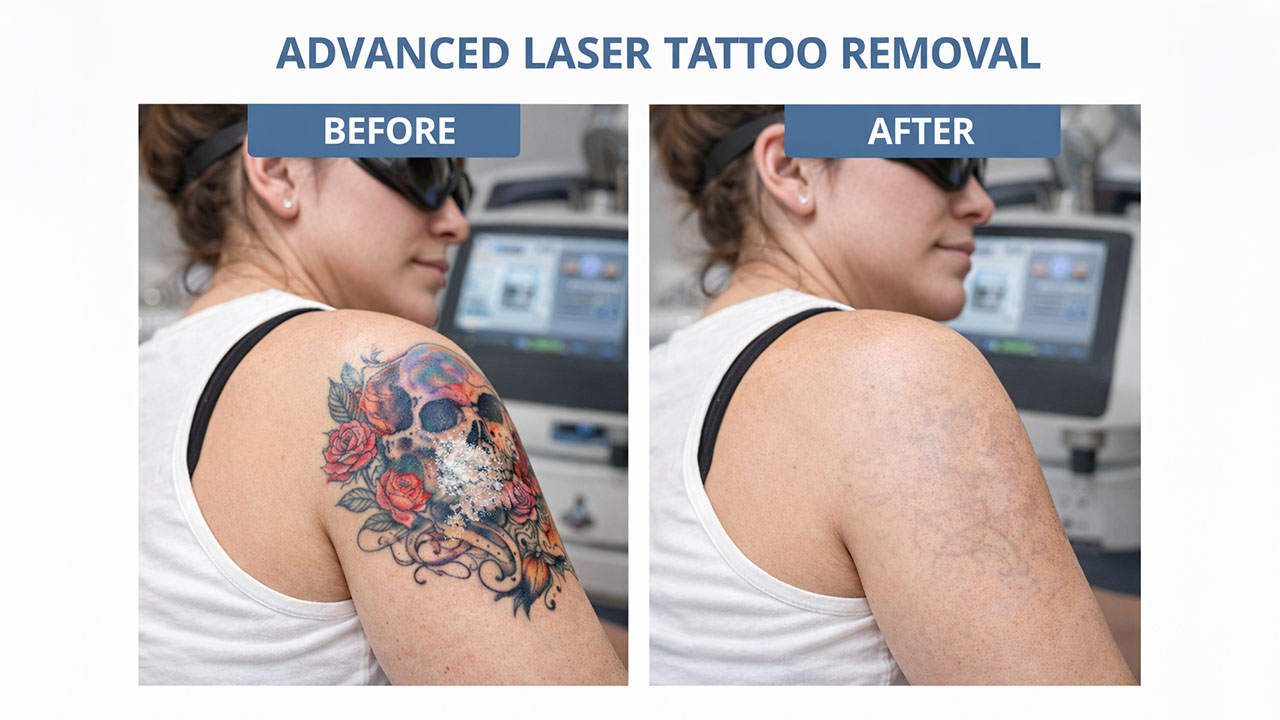
Multi-wavelength tattoo removal treatment represents one of the most advanced and effective approaches available for removing unwanted tattoos. As tattoo styles, pigments, and application techniques have evolved, laser technology has advanced alongside them. Today’s multi-wavelength systems are specifically designed to address the complexity of modern tattoos, which often contain multiple ink colors, varying pigment densities, and layers of ink deposited at different depths in the skin. This approach allows for more precise targeting, improved clearance rates, and a safer overall treatment experience.
For individuals seeking professional tattoo removal with predictable results, multi-wavelength technology has become the preferred standard.
How Laser Tattoo Removal Works
Laser tattoo removal is based on a scientific principle known as selective photothermolysis. In practical terms, this means that a laser emits highly concentrated pulses of light that pass harmlessly through the upper layers of the skin and are absorbed by tattoo ink particles beneath the surface. When the ink absorbs the laser energy, it rapidly heats and fractures into tiny fragments.
Once these ink particles are broken down, the body’s immune system gradually removes them through natural processes, primarily via the lymphatic system. Over time, the tattoo fades as more ink is cleared after each treatment session.
The effectiveness of this process depends heavily on matching the correct laser wavelength to the specific color and composition of the tattoo ink.
Why Ink Color Matters in Tattoo Removal
Tattoo inks are made from a wide variety of pigments, each with unique light-absorption characteristics. Black ink absorbs most wavelengths of laser light, making it the easiest color to treat. Other colors, however, are far more selective.
Red, orange, yellow, green, blue, and turquoise inks all respond differently to laser energy. Some colors reflect certain wavelengths rather than absorbing them, which makes them more resistant to removal when only one wavelength is used. This is the primary limitation of older, single-wavelength tattoo removal systems.
Multi-wavelength tattoo removal directly addresses this challenge by offering multiple wavelengths that can be selected based on the specific colors present in the tattoo.
What Is Multi-Wavelength Tattoo Removal?
Multi-wavelength tattoo removal refers to the use of laser systems that can emit more than one wavelength of light, either within the same device or across a treatment plan using complementary technologies. Each wavelength is calibrated to target specific ink colors while minimizing interaction with surrounding skin tissue.
Rather than relying on a one-size-fits-all approach, practitioners can customize treatments for each individual tattoo. This precision improves the efficiency of ink breakdown and reduces the likelihood of incomplete removal or unnecessary skin irritation.
Common Wavelengths Used in Treatment
Multi-wavelength systems typically include several key wavelengths, each serving a specific purpose.
Shorter wavelengths are commonly used to target darker pigments such as black, dark blue, and deep purple. These wavelengths penetrate deeply and are highly effective for dense or heavily saturated ink.
Medium wavelengths are often chosen for warmer colors such as red, orange, and brown. These pigments require a different energy profile to break apart efficiently.
Longer wavelengths are particularly useful for lighter or more resistant colors, including green, teal, and certain blues. These inks are among the most difficult to remove and often require advanced laser technology to achieve meaningful fading.
By combining these wavelengths strategically, practitioners can treat nearly all tattoo colors with greater success.
Advantages of Multi-Wavelength Technology
One of the most significant advantages of multi-wavelength tattoo removal is improved treatment effectiveness. Because each color can be targeted with the most appropriate wavelength, ink fragmentation is more complete with each session. This often leads to faster fading and fewer total treatments compared to single-wavelength systems.
Another major benefit is enhanced safety. By precisely targeting ink particles rather than surrounding skin tissue, multi-wavelength systems reduce the risk of burns, scarring, and pigmentation changes. This is especially important for individuals with sensitive skin or higher levels of natural pigmentation.
Additionally, multi-wavelength treatment offers greater flexibility. Tattoos vary widely in age, size, ink composition, and application technique. A customizable approach allows practitioners to adapt treatment plans as the tattoo fades and changes over time.
Treatment Experience and Session Structure
A typical multi-wavelength tattoo removal session begins with a thorough consultation. During this appointment, the practitioner evaluates the tattoo’s size, location, colors, ink density, and the individual’s skin type. This assessment helps determine which wavelengths will be used and how many sessions may be required.
During treatment, the laser is applied in short pulses over the tattooed area. Patients often describe the sensation as similar to the snap of a rubber band against the skin. Cooling systems or topical numbing agents may be used to improve comfort.
Sessions are relatively quick, often lasting only a few minutes for small tattoos and longer for larger or more complex designs. After treatment, the area may appear red or swollen, similar to a mild sunburn, but this typically resolves within a few days.
Healing and Aftercare
Proper aftercare plays a crucial role in the success of multi-wavelength tattoo removal. Following each session, patients are usually advised to keep the treated area clean, dry, and protected from sun exposure. Applying soothing ointments and avoiding friction can help promote healing and reduce irritation.
It is normal for the tattoo to appear darker or more pronounced immediately after treatment due to ink fragmentation and mild inflammation. Over the following weeks, gradual fading becomes noticeable as the body clears the ink particles.
Spacing treatments appropriately is essential. Most sessions are scheduled several weeks apart to allow the immune system sufficient time to process and remove broken-down ink.
Factors That Influence Results
While multi-wavelength technology significantly improves outcomes, several factors still influence how quickly and completely a tattoo can be removed. These include the tattoo’s age, depth, ink composition, and location on the body. Tattoos located closer to the heart, such as those on the torso, often fade faster due to better circulation.
Skin type also plays a role. Advanced systems are designed to treat a wide range of skin tones safely, but treatment settings may be adjusted to minimize pigmentation changes.
Individual immune response is another key factor. A healthy lymphatic system contributes to more efficient ink removal over time.
Suitability for Different Tattoo Types
Multi-wavelength tattoo removal is effective for a broad range of tattoos, including professional, amateur, cosmetic, and cover-up tattoos. Professional tattoos tend to contain denser ink and may require more sessions, but the versatility of multi-wavelength systems allows for gradual and controlled fading.
Cover-up tattoos, which often involve multiple layers of ink, particularly benefit from this approach. By addressing different ink colors and depths separately, practitioners can achieve more uniform results.
Safety and Risk Considerations
When performed by trained professionals using modern equipment, multi-wavelength tattoo removal is considered very safe. Side effects are generally mild and temporary, including redness, swelling, and sensitivity in the treated area.
More serious complications, such as scarring or permanent pigmentation changes, are rare and typically associated with improper technique or inadequate aftercare. Choosing an experienced provider and following post-treatment instructions significantly reduces these risks.
Comparing Multi-Wavelength to Older Technologies
Compared to older single-wavelength lasers, multi-wavelength systems represent a substantial improvement in both performance and patient experience. Single-wavelength devices often struggle with lighter or resistant colors, leading to incomplete removal or prolonged treatment timelines.
Multi-wavelength technology offers more consistent fading across all ink colors and reduces the frustration associated with stubborn pigments. This efficiency translates into fewer sessions, better cosmetic outcomes, and greater overall satisfaction.
Long-Term Outcomes and Expectations
It is important for patients to maintain realistic expectations. While many tattoos can be removed almost completely, results vary depending on individual factors. In some cases, faint traces of ink may remain, particularly with very light or complex colors.
However, multi-wavelength tattoo removal provides the highest likelihood of achieving significant fading or near-complete removal. For those seeking tattoo removal for personal, professional, or medical reasons, this approach offers a reliable and scientifically grounded solution.
Multi-wavelength tattoo removal treatment represents the forefront of laser technology in aesthetic medicine. By using multiple wavelengths to precisely target a wide spectrum of tattoo inks, this method delivers superior results with enhanced safety and efficiency. It accommodates the complexity of modern tattoos and provides a personalized treatment experience tailored to each individual’s needs.
For anyone considering tattoo removal, understanding the advantages of multi-wavelength technology can help set clear expectations and guide informed decision-making. With proper treatment planning, skilled application, and appropriate aftercare, multi-wavelength tattoo removal offers an effective path toward clearer, ink-free skin.