Tattoos are often chosen as permanent symbols of personal expression, but circumstances can change. Whether due to evolving tastes, professional requirements, or personal reasons, many people seek tattoo removal. Among the available techniques, laser tattoo removal has emerged as the most effective and widely used method. Over the past few decades, technology has advanced significantly, offering safer, more precise, and less invasive ways to fade or completely remove tattoos. This article explores the main laser tattoo removal methods, how they work, their benefits, limitations, and what to expect during treatment.
Understanding Tattoo Ink and Skin Interaction
To understand why lasers are effective, it helps to know how tattoos work. When a tattoo is applied, ink is injected into the dermis, the second layer of skin. The body’s immune system cannot easily break down the ink particles because they are too large, which is why tattoos remain permanent. Laser tattoo removal works by delivering high-intensity light energy that targets these ink particles, breaking them into smaller fragments. Once fragmented, the particles are gradually cleared by the body’s lymphatic system.
Different inks absorb different wavelengths of light, which is why multiple types of lasers are often needed for multicolored tattoos.
Traditional Q-Switched Lasers
The Q-switched laser was once the gold standard for tattoo removal. This technology delivers short, high-energy pulses of light in nanoseconds. These rapid pulses shatter ink particles without significantly damaging the surrounding skin.
There are several variations of Q-switched lasers:
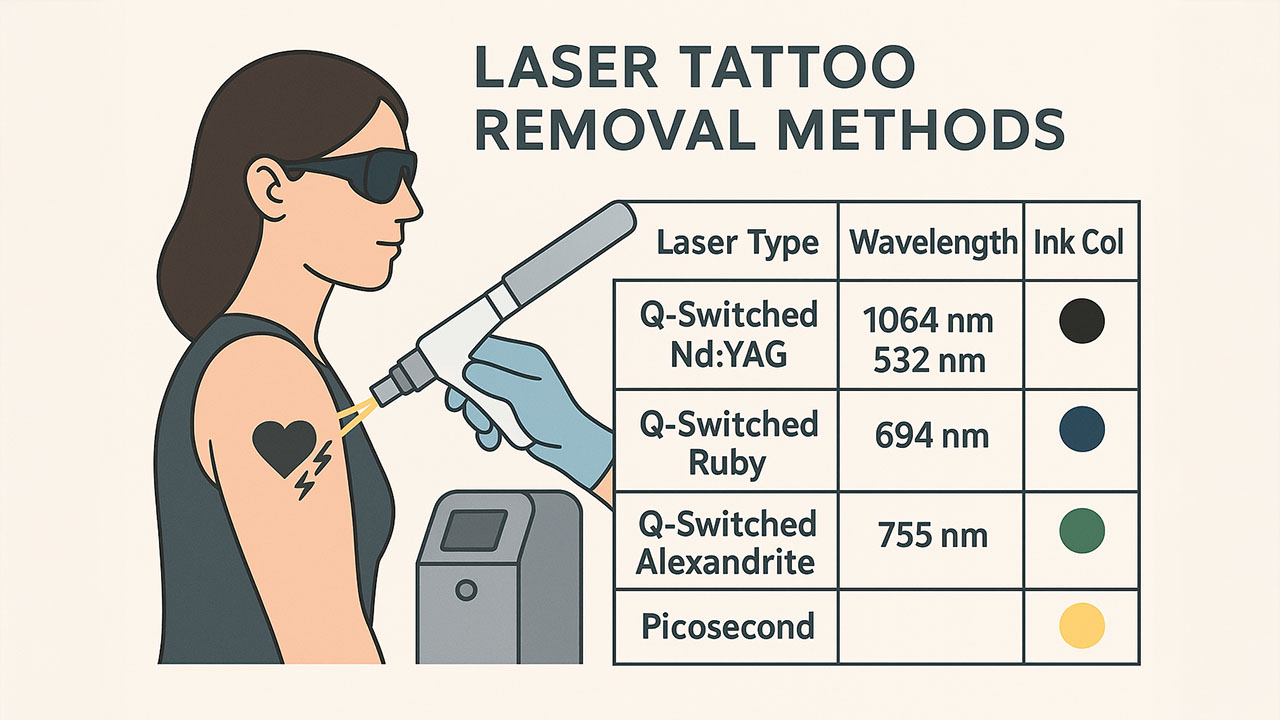
- Q-Switched Nd:YAG Laser (1064 nm and 532 nm): Effective for darker inks such as black and blue, and the 532 nm wavelength can target red and orange pigments.
- Q-Switched Ruby Laser (694 nm): Works well on green and dark blue pigments but has higher risk of pigmentation changes.
- Q-Switched Alexandrite Laser (755 nm): Often used for green and blue inks with moderate effectiveness.
Q-switched lasers remain effective but typically require many treatment sessions. They can cause discomfort, and results vary depending on ink color, tattoo size, and skin type.
Picosecond Lasers
The most advanced technology in tattoo removal today is the picosecond laser. Unlike nanosecond Q-switched lasers, picosecond devices deliver pulses in trillionths of a second. This ultra-short burst creates a photomechanical effect, meaning it shatters ink into much smaller fragments than older methods.
Key advantages include:
- Faster Results: Picosecond lasers often remove tattoos in fewer sessions than Q-switched lasers.
- Better Color Range: They can treat stubborn pigments such as green, blue, and even light colors like yellow.
- Less Skin Damage: Because the pulses are so short, there is less heat buildup, reducing the risk of burns or scarring.
Popular devices include PicoSure and PicoWay, both FDA-approved systems widely used in clinics.
Laser Wavelengths and Ink Colors
One of the challenges in tattoo removal is that no single wavelength removes all colors. Clinics often use multiple lasers or devices that can switch between wavelengths. Here’s how wavelengths generally correspond to ink colors:
- 1064 nm (Nd:YAG): Best for black, brown, and dark blue.
- 532 nm (Nd:YAG): Targets red, orange, and some yellow pigments.
- 755 nm (Alexandrite): Effective for green and teal inks.
- 694 nm (Ruby): Works on blue and green, though less commonly used today.
Because tattoos often contain a mix of pigments, complete removal requires carefully tailored treatments.
Treatment Process and What to Expect
Laser tattoo removal typically involves multiple sessions spaced several weeks apart. Here’s the general process:
- Consultation: A specialist evaluates the tattoo’s size, color, age, and location, as well as the patient’s skin type.
- Protective Measures: Both patient and provider wear protective eyewear during treatment.
- Laser Application: The laser device delivers pulses of light to the tattooed area. Patients often describe the sensation as similar to snapping rubber bands against the skin.
- Aftercare: Following treatment, the area may be red, swollen, or blistered. Healing ointments, bandages, and sun protection are usually recommended.
- Multiple Sessions: Depending on the tattoo, 5–12 sessions (sometimes more) may be required for complete removal.
Factors Affecting Removal Success
Not all tattoos respond equally to laser treatment. The following factors play a role in success rates:
- Ink Color: Black is easiest to remove, while lighter shades like yellow and white are more resistant.
- Ink Depth and Density: Professionally done tattoos often require more sessions than amateur tattoos because the ink is applied more deeply and evenly.
- Tattoo Age: Older tattoos may fade faster since ink particles have already broken down over time.
- Skin Type: Darker skin tones carry a higher risk of hyperpigmentation or hypopigmentation, requiring careful laser selection.
- Location: Tattoos closer to the heart (better blood flow) often fade more quickly than those on extremities like hands or ankles.
Potential Side Effects and Risks
While laser tattoo removal is generally safe, some risks exist:
- Temporary Discomfort: Redness, swelling, and blistering are common but usually short-lived.
- Pigment Changes: Some patients experience lightening or darkening of the skin.
- Scarring: Rare with modern lasers but possible if aftercare is neglected.
- Incomplete Removal: Some inks, especially light or unusual pigments, may not fully disappear.
Choosing an experienced provider greatly reduces these risks.
Combining Lasers with Other Methods
In some cases, lasers are combined with other approaches for better outcomes:
- Fractional Lasers: Used alongside tattoo removal lasers to resurface the skin and improve healing.
- Perfluorodecalin (PFD) Patches: Applied before laser treatment to reduce whitening (frosting) and allow multiple passes in one session.
- Topical Treatments: While creams alone are ineffective, some may support skin healing when combined with laser therapy.
Alternative Non-Laser Methods
Although lasers are the gold standard, other tattoo removal methods exist, though they are less effective or riskier:
- Surgical Excision: Cutting out the tattooed skin and stitching the area closed; only feasible for very small tattoos.
- Dermabrasion: Sanding away the skin layers; often painful and carries a higher risk of scarring.
- Tattoo Removal Creams: Marketed as affordable solutions but rarely effective, since they cannot penetrate deeply into the dermis.
Compared to these, lasers remain the safest and most effective method for most patients.
The Future of Tattoo Removal
Research continues to improve outcomes. Newer lasers with multiple wavelengths in a single device, enhanced cooling systems, and advanced aftercare techniques promise faster, safer, and more comfortable treatments. There is also growing interest in nanotechnology-based creams that might one day aid or replace laser therapy.
Laser tattoo removal has evolved from early, limited technologies into a highly advanced, effective, and safe procedure. Q-switched lasers laid the groundwork, but picosecond lasers now lead the field, offering faster results with fewer risks. The choice of wavelength, number of sessions, and ultimate outcome depend on the tattoo’s characteristics and the patient’s skin type.
For anyone considering tattoo removal, consulting a qualified, experienced professional is essential. With proper care and realistic expectations, modern laser methods can successfully erase unwanted tattoos, offering a fresh start and restored confidence.