Laser hair removal has become one of the most popular cosmetic procedures for people seeking long-term hair reduction. While shaving, waxing, and depilatory creams offer temporary results, laser hair removal provides a far more lasting solution by targeting the hair at its root. Understanding how the treatment works can help you make informed decisions about whether it is right for your needs. This guide explores the science behind the technology, what happens during a treatment session, the stages of hair growth that influence results, and what you can expect before, during, and after your appointments.
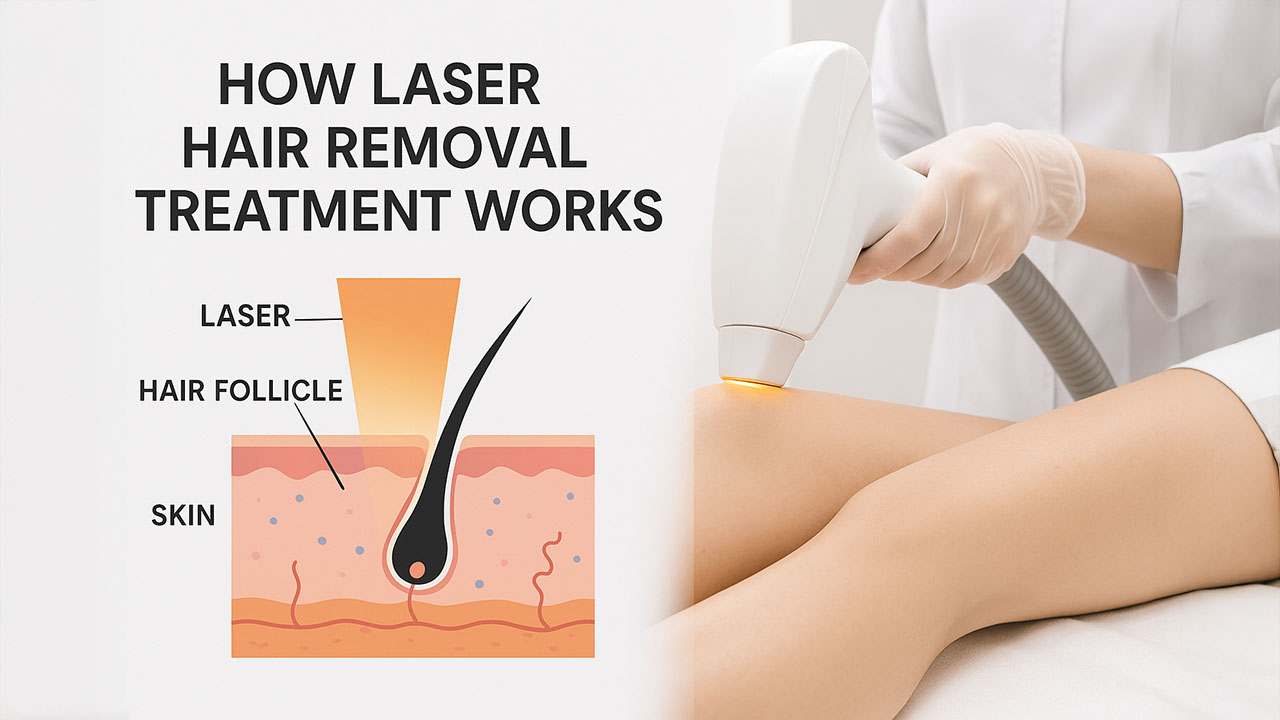
At its core, laser hair removal works by directing concentrated light energy into the hair follicles. The pigment in the hair shaft absorbs this light and converts it into heat, which damages the follicle’s ability to produce future hair. The principle behind this is called selective photothermolysis. “Selective” refers to the laser’s ability to target the melanin in the hair while minimizing damage to the surrounding skin. “Photothermolysis” describes how light (photo) converts into heat (thermo) to break down the follicle (lysis). Different lasers are used depending on skin tone, hair type, and treatment area, but they all work on this same foundational principle.
One of the most important factors influencing the success of laser hair removal is the hair growth cycle. Hair grows in three distinct phases. The first phase is anagen, the active growth phase, when the hair is still connected to the follicle and rich in pigment. This is the stage when laser hair removal is most effective because the laser energy can travel down the hair shaft and directly reach the follicle. The second phase is catagen, a transitional stage when the hair begins to detach from the follicle. In this stage, laser treatment is less effective because the connection between hair and follicle is weakening. The third phase is telogen, the resting phase, when the hair is fully detached and eventually falls out. Since the laser depends on pigment-rich, actively growing hair, only a portion of the hairs in any given area can be effectively treated during each session.
This explains why multiple sessions are needed. Most individuals require between six and eight treatments spaced four to eight weeks apart, depending on the treatment area. Areas with faster hair growth, like the face, may require more frequent visits, while areas like the legs can be treated in longer intervals. As the sessions progress, you will notice hair becoming finer, lighter, and sparser.
During your treatment session, the provider will first clean the area to remove oils or debris. Some clinics apply numbing cream, especially for sensitive areas such as the upper lip or bikini line. You and the practitioner will both wear protective eyewear to shield your eyes from the bright laser pulses. The laser device is then adjusted based on your skin tone, hair thickness, and the specific area being treated. Modern systems often incorporate cooling mechanisms—either chilled tips, cryogen sprays, or cold air—to help protect the skin and minimize discomfort.
When the laser pulse is delivered, you may feel a slight snapping sensation, similar to a rubber band lightly striking the skin. Some devices feel like a warm prickling sensation instead. People with coarse, dark hair may feel the pulses more intensely, as thicker hairs absorb more energy. Nonetheless, most individuals tolerate the procedure well, and the cooling features significantly reduce discomfort. Sessions can be as short as a few minutes for small areas like the chin or underarms, or up to an hour for larger areas such as the back or legs.
After the treatment, you may experience mild redness, swelling, or warmth in the treated area. These effects are normal and usually resolve within a few hours. Applying soothing aloe vera gel or a cold compress can help ease discomfort. The treated hairs will not fall out immediately; instead, they shed gradually over the following one to three weeks as the damaged follicles release them. It is important not to pluck or wax the hairs during this time, as doing so can interfere with the treatment’s effectiveness. Shaving is acceptable because it does not disturb the follicle.
Preparing properly for your treatment can improve results and reduce the risk of side effects. Most providers recommend avoiding sun exposure and tanning beds for at least two weeks before treatment, as tanned skin increases the risk of pigment changes. You should also avoid waxing, plucking, or threading for at least four weeks prior because the laser requires the hair shaft to be present. However, shaving is recommended the day before your session so the laser can focus its energy on the follicle instead of burning the visible hair above the skin. Avoid using skincare products containing retinoids or alpha hydroxy acids on the treatment area for a few days before treatment, as these can increase skin sensitivity.
Not all lasers are the same, and understanding the different types can help you appreciate how tailored the treatment can be. Alexandrite lasers are often recommended for lighter skin types because of their high melanin absorption rate and fast treatment speed. Diode lasers offer excellent results across a wider range of skin tones and hair types. Nd:YAG lasers are the safest choice for darker skin because they bypass more superficial pigment and target the follicle at a deeper level. Many modern systems combine multiple wavelengths into one device, allowing providers to customize treatment based on the client’s unique characteristics.
Laser hair removal is generally safe when performed by trained professionals, but like any cosmetic procedure, it carries some risks. Temporary side effects may include redness, swelling, or minor skin irritation. Less commonly, changes in skin pigmentation—either increased or decreased pigmentation—can occur, particularly in individuals with darker skin or recent sun exposure. Blistering or scarring is extremely rare when proper protocols are followed. Following aftercare instructions carefully greatly reduces the likelihood of complications.
Over time, the benefits of laser hair removal become increasingly apparent. Many people experience a dramatic reduction in hair growth, often up to 80–90% after completing a full series of treatments. The hair that does regrow is usually much finer and lighter. This makes upkeep far easier and minimizes issues like ingrown hairs, razor burn, and skin irritation that often accompany shaving or waxing. Some people may require occasional maintenance treatments once or twice a year to sustain optimal results, especially in areas influenced by hormones.
Laser hair removal is an excellent option for those seeking long-lasting hair reduction with minimal downtime. The treatment’s success lies in its ability to target hair follicles during the optimal growth stage using precise, controlled laser energy. While multiple sessions are necessary and preparation is essential, the long-term benefits—smoother skin, reduced hair growth, and convenience—make it a worthwhile investment for many individuals. Whether you want to treat a small facial area or a larger body region, understanding how laser hair removal works allows you to approach your treatment with confidence and realistic expectations.