Introduction
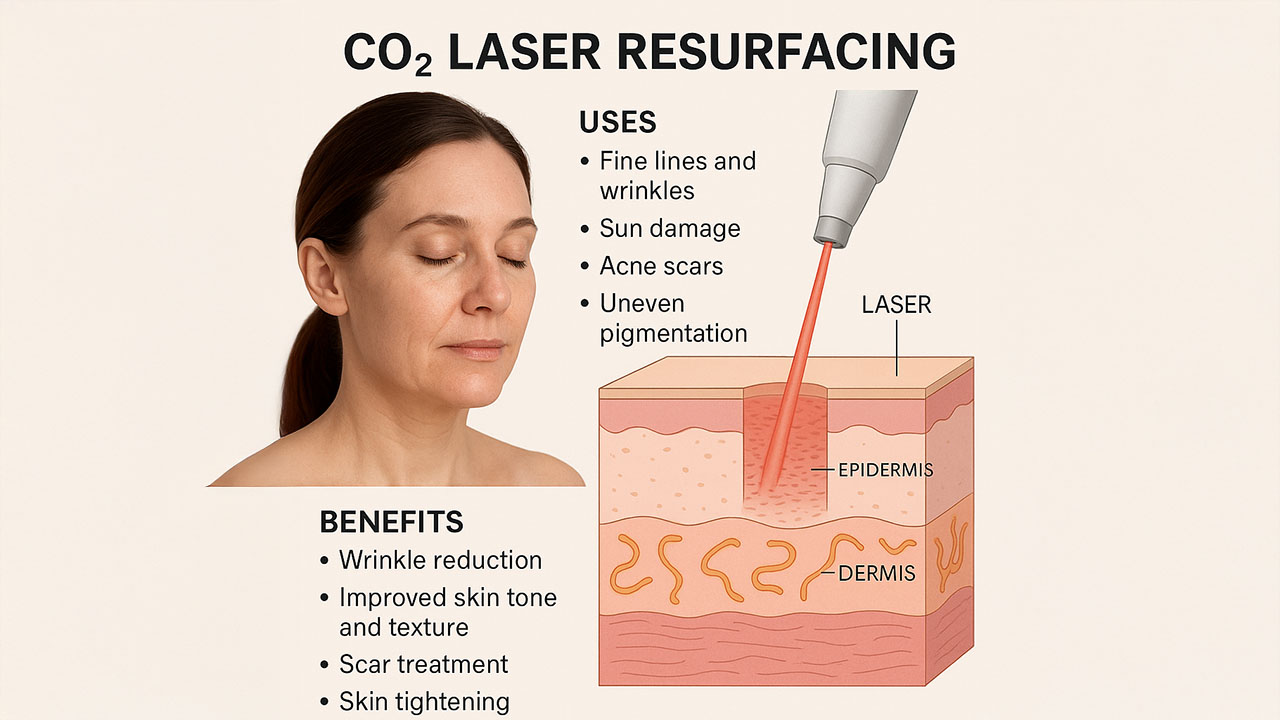
In the realm of modern aesthetic medicine, CO₂ laser resurfacing has emerged as one of the most effective procedures for skin rejuvenation. By harnessing the power of carbon dioxide laser technology, this treatment addresses a wide range of skin concerns—from fine lines and wrinkles to acne scars, sun damage, and uneven pigmentation. Unlike topical creams or chemical peels, CO₂ laser resurfacing works at a deeper level of the skin, promoting natural healing and long-lasting results.
This article explores how CO₂ laser resurfacing works, its benefits, recovery process, potential risks, and what patients should consider before undergoing the procedure.
How CO₂ Laser Resurfacing Works
CO₂ (carbon dioxide) lasers have been used in dermatology for decades, primarily for their ability to precisely remove layers of skin tissue. The treatment relies on a high-intensity beam of light that vaporizes the water in skin cells, effectively removing thin layers of damaged or aged skin.
There are two main types of CO₂ laser resurfacing:
- Traditional (Ablative) CO₂ Laser Resurfacing
- Removes the entire top layer of skin in the treated area.
- Highly effective for deep wrinkles, scars, and significant sun damage.
- Requires longer downtime and recovery.
- Fractional CO₂ Laser Resurfacing
- Uses a fractional approach, creating microscopic columns of laser energy while leaving surrounding tissue intact.
- Stimulates collagen production with faster healing compared to traditional methods.
- Balances results with reduced downtime.
Both methods encourage the skin to heal and regenerate, replacing damaged tissue with smoother, healthier, and more youthful-looking skin.
Benefits of CO₂ Laser Resurfacing
Patients often choose CO₂ laser resurfacing because it delivers noticeable and long-lasting results. The key benefits include:
- Reduction of Fine Lines and Wrinkles
By removing damaged skin and stimulating collagen production, CO₂ lasers soften wrinkles around the eyes, mouth, and forehead.
- Treatment of Sun Damage and Pigmentation
Sunspots, age spots, and uneven skin tone can fade significantly after treatment, restoring a more even complexion.
- Improvement of Acne and Surgical Scars
Fractional CO₂ lasers are particularly effective for breaking down scar tissue and encouraging the formation of new, healthy skin cells.
- Skin Tightening
The thermal energy from the laser promotes collagen remodeling, leading to firmer and tighter skin over time.
- Long-Lasting Results
With proper skincare and sun protection, results can last for several years, making it a cost-effective investment compared to temporary treatments.
The Procedure: What to Expect
Pre-Treatment Preparation
- A consultation with a board-certified dermatologist or cosmetic surgeon is essential.
- Patients may be advised to stop certain medications or skincare products (such as retinoids or blood thinners) before treatment.
- Antiviral medication may be prescribed if the patient has a history of cold sores to prevent outbreaks.
During the Procedure
- Local anesthesia, sedation, or general anesthesia may be used depending on the treatment area and intensity.
- The laser is carefully applied to the targeted areas, removing damaged skin layer by layer.
- A session can last anywhere from 30 minutes to 2 hours.
Immediately After Treatment
- The skin will appear red, swollen, and may feel similar to a sunburn.
- A protective ointment or dressing may be applied to promote healing.
Recovery and Downtime
Recovery varies depending on whether the procedure was traditional or fractional:
- Traditional CO₂ Resurfacing:
Healing takes 2 to 3 weeks, during which patients experience redness, oozing, and peeling. - Fractional CO₂ Resurfacing:
Recovery is usually shorter, around 5 to 7 days, with less severe redness and flaking.
Aftercare Tips:
- Keep the treated skin clean and moisturized.
- Avoid direct sun exposure; always wear sunscreen with high SPF.
- Use gentle cleansers and avoid exfoliation until the skin has fully healed.
- Follow all post-treatment instructions from the provider to minimize complications.
Risks and Side Effects
While CO₂ laser resurfacing is generally safe when performed by a qualified provider, patients should be aware of potential risks:
- Redness and Swelling: Normal and expected, but may persist for weeks.
- Infection: Rare, but possible if aftercare instructions are not followed.
- Changes in Skin Pigmentation: Some patients may develop temporary or permanent lightening (hypopigmentation) or darkening (hyperpigmentation).
- Scarring: Uncommon, but can occur in patients prone to keloids.
- Prolonged Healing: Smokers and individuals with certain medical conditions may take longer to recover.
Who Is a Good Candidate?
Ideal candidates for CO₂ laser resurfacing include:
- Individuals with fine lines, wrinkles, acne scars, or sun damage.
- Patients with fair to medium skin tones (darker skin tones carry a higher risk of pigmentation changes, though advances in fractional technology have improved outcomes).
- Those in good overall health with realistic expectations.
Patients who may not be good candidates include:
- Individuals with active acne or infections in the treatment area.
- People who have taken isotretinoin (Accutane) within the past 6–12 months.
- Patients with certain chronic health conditions that affect healing.
Results and Longevity
Patients typically notice improvement once the skin heals, with continued enhancement over the next 3 to 6 months as collagen production increases.
- Traditional CO₂ Laser Results: Can last up to 10 years with good skincare and sun protection.
- Fractional CO₂ Laser Results: Typically last 3 to 5 years, though multiple sessions may be recommended.
Maintaining results involves daily use of sunscreen, a healthy lifestyle, and occasional touch-up treatments.
Comparing CO₂ Laser to Other Treatments
- Erbium Laser Resurfacing: Less aggressive, better for mild wrinkles and patients with darker skin. Faster recovery but not as dramatic results as CO₂.
- Chemical Peels: Effective for surface issues but cannot penetrate as deeply as lasers.
- Microneedling/Radiofrequency: Good for collagen stimulation but less powerful for resurfacing scars and deep wrinkles.
- Injectables (Botox, Fillers): Address wrinkles and volume loss but do not improve overall skin texture or sun damage.
CO₂ laser resurfacing often serves as the gold standard for patients seeking comprehensive skin rejuvenation.
Cost Considerations
The cost of CO₂ laser resurfacing varies widely depending on location, provider experience, and the size of the treatment area.
- Average Range: $2,000 to $5,000 per session.
- Fractional treatments may be less expensive but often require multiple sessions.
- Insurance generally does not cover cosmetic resurfacing, though it may cover procedures for removing precancerous lesions or scars from medical conditions.
CO₂ laser resurfacing is one of the most advanced and effective treatments for skin rejuvenation, offering patients the chance to dramatically improve wrinkles, scars, sun damage, and skin texture. While it requires downtime and careful aftercare, the long-lasting results make it a valuable option for those seeking a more youthful appearance.
By consulting with a qualified dermatologist or cosmetic surgeon, patients can determine whether traditional or fractional CO₂ resurfacing best suits their needs and create a personalized plan for achieving radiant, healthy skin.